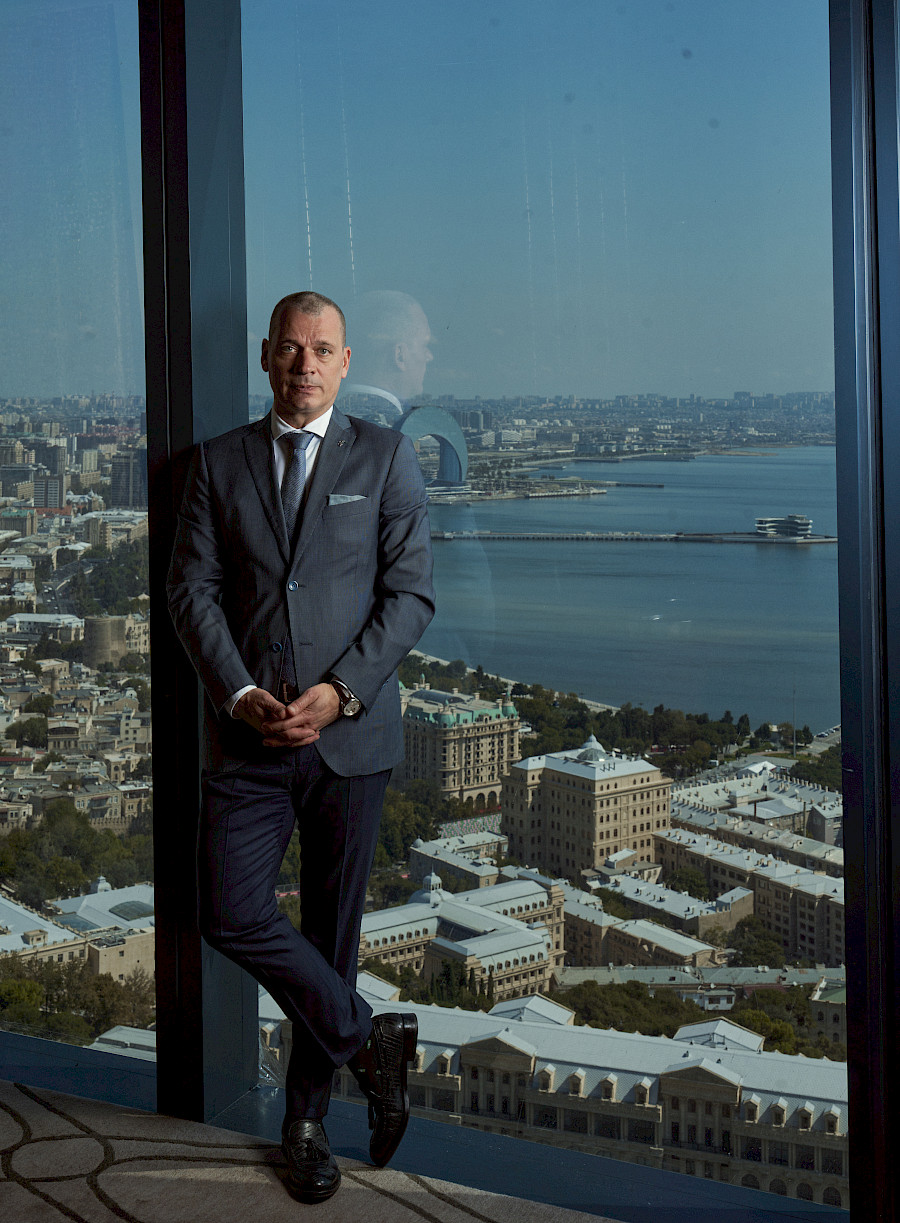
With more than two decades of experience in luxury hospitality across Europe, the Middle East, and Asia, Giuliano Ungaro has built an international career with some of the world’s most distinguished hospitality brands. Having played a key role in the opening of The Maybourne Riviera and previously led Kempinski Residences Alaçatı Çeşme, Ungaro now begins a new chapter as the General Manager of Fairmont Baku, Flame Towers, effective 13 July 2026.
In this exclusive interview, Ungaro speaks about the meaning of authentic luxury, the importance of local culture, and his first impressions of Azerbaijan.
You have spent more than two decades working with some of the world’s most renowned luxury hospitality brands. Looking back, what has this journey taught you about what truly makes a hotel exceptional?
I have had the privilege of working in some remarkable hotels and destinations, but one lesson has remained constant throughout my career: buildings do not create memories; people do. Of course, exceptional design, beautiful rooms, and outstanding facilities are important. However, what guests remember years later is how a place made them feel. They remember the warmth of a welcome, the anticipation of their needs before they have to ask, and the genuine human connections they experienced during their stay.
An exceptional hotel is one that combines flawless execution with sincere hospitality. It creates a sense of belonging, regardless of where guests come from. In my experience, luxury is at its best when it feels effortless and authentic.
You have worked with very different luxury brands, from Kempinski and Jumeirah to Bvlgari, Shangri-La, and Maybourne. How has each of these experiences shaped your understanding of luxury, and what elements of them do you carry with you today?
Each brand taught me something unique about luxury. Bvlgari showed me how luxury can be expressed through craftsmanship, exclusivity, and extraordinary attention to detail, while Maybourne reinforced the importance of creating experiences that feel deeply personal and distinctive. Shangri-La strengthened my appreciation for genuine care and the traditions of Asian hospitality, Jumeirah demonstrated the power of innovation and bold ambition, and Kempinski instilled in me a lasting appreciation for European heritage and timeless hospitality.
The common thread across all of them is the understanding that luxury is not about excess. It is about creating an emotional connection with the guest. Today, I carry forward a blend of these experiences while always adapting them to the local culture and destination. The best luxury hotels do not impose a global formula; they celebrate the uniqueness of where they are.
You have been involved in both major transformations and new hotel openings. What is more challenging for a general manager: creating something from the ground up or transforming a property with an established identity and history?
Both are challenging, but in very different ways. Opening a hotel is like starting with a blank canvas. You have the opportunity to define the culture, build the team, and establish the guest experience from day one. It requires vision, energy, and a willingness to make countless decisions every day.
Transforming an established hotel can be even more complex because you inherit a legacy. Guests, colleagues, and the local community already have expectations and emotional connections with the property. The challenge is respecting what people love while having the courage to evolve and improve.
Personally, I enjoy both. Hospitality is about continuous reinvention, whether you are creating something new or helping something great become even better.
Your career has taken you to many parts of the world. What brought you to Baku, and what was your first impression of the city?
What attracted me to Baku was the combination of opportunity and authenticity. Professionally, Fairmont Baku, Flame Towers is one of the most iconic luxury properties in the region, and the chance to lead such a landmark hotel was extremely appealing. Personally, I was excited to discover a country and culture that were new to me.
My first impression of Baku was that it is a city full of confidence and character. The blend of history and modernity is extraordinary. You can walk through the historic streets of the Old City and, moments later, find yourself surrounded by some of the most striking contemporary architecture anywhere in the world. What has impressed me most, however, is the warmth of the people. Azerbaijanis have a natural generosity and pride in welcoming visitors that immediately makes you feel at home.
What makes this chapter even more special is that I have arrived in Baku with my family. My wife is Malaysian, and our three children were each born in different countries throughout our international journey. We are truly an international family, and we have all been touched by the kindness and hospitality we have experienced here. One of my favourite moments so far has been exploring Baku through the eyes of my children. Children are often the most honest ambassadors of a destination, and seeing how quickly they have embraced life here has confirmed that Azerbaijan is a very special place.
Fairmont Baku, Flame Towers is one of the most recognisable landmarks in Azerbaijan. How do you see the relationship between the architecture of the Flame Towers and the hotel itself?
The relationship is inseparable. The Flame Towers have become a symbol of modern Azerbaijan. They represent ambition, progress, confidence, and openness to the world. Fairmont Baku enjoys the privilege and responsibility of being at the heart of that symbol.
For me, the hotel should reflect the same qualities as the towers themselves. It should be bold yet welcoming, internationally recognised yet deeply connected to its local roots. The architecture captures attention, but our service, experiences, and people must give that landmark its soul.
Every successful luxury hotel has to balance international standards with a strong sense of place. How would you like guests to experience Azerbaijan through their stay at Fairmont Baku?
I would like every guest to leave Fairmont Baku with a genuine connection to Azerbaijan. That experience should extend beyond sightseeing. It should be reflected in the stories they hear, the cuisine they taste, the artwork they discover, and the people they meet.
We are proud to be part of a global luxury brand, but our responsibility is also to showcase the richness of Azerbaijani culture. Whether through local ingredients, cultural collaborations, authentic experiences, or simply the warmth of our team members, I want guests to feel the spirit of Azerbaijan throughout their stay. If we do that successfully, guests will return home not only remembering our hotel, but also remembering the country.
What have you discovered about Azerbaijani hospitality since arriving in Baku? Is there anything about the local culture that particularly impressed you?
Absolutely. I have worked in many countries, and one thing that stands out in Azerbaijan is the sincerity of the hospitality. It doesn’t feel transactional; it feels personal. People genuinely want guests to feel comfortable and welcome. There is a generosity of spirit that can be felt everywhere, from family gatherings to business meetings and everyday interactions.
My family and I have experienced this firsthand since arriving in Baku. We have felt incredibly welcomed, and that has made our transition both easy and enjoyable. It is one of the qualities that makes Azerbaijan such a special destination.
Luxury hospitality has changed dramatically in recent years. Guests today increasingly look for authenticity, privacy, personalisation, and memorable experiences rather than simply five-star facilities. What do you think the luxury traveller of 2026 is really looking for?
Today’s luxury traveller is seeking meaning. Beautiful hotels remain important, but luxury guests increasingly value experiences that feel authentic, personal, and memorable. They want to discover destinations rather than simply visit them. Privacy, wellbeing, flexibility, and personalisation are all priorities, but above all, guests want their time to feel valuable. Time has become one of the greatest luxuries.
Hotels that can combine exceptional service, local authenticity, and genuine emotional connections will continue to thrive because luxury is becoming more human, not less.
You are known for building high-performing teams. What qualities do you look for in people who work in luxury hospitality, and what makes someone truly exceptional in this industry?
Technical skills can be taught, but attitude is much harder to teach. I look for individuals who are curious, empathetic, humble, and genuinely enjoy taking care of others. The best hospitality professionals are those who find satisfaction in creating memorable experiences for people.
What makes someone truly exceptional is their ability to combine professionalism with authenticity. Guests can immediately sense when service comes from the heart.
Ultimately, luxury hospitality is a business of people serving people, and that human connection remains our greatest differentiator.
Behind every memorable hotel experience there is often an invisible amount of work, discipline, and attention to detail. What is one detail that guests may never consciously notice, but that you believe can completely change their experience?
Consistency. Most guests will never notice the countless procedures, training sessions, quality reviews, and preparations that happen behind the scenes every day. However, they immediately notice how a hotel makes them feel. Consistency creates trust. It means receiving the same warmth, attention, and quality at every interaction throughout the guest journey. When consistency is present, guests may never talk about it. When it is absent, they always do.
Baku is developing rapidly as a destination for luxury travel, business, and international events. What potential do you see for the city on the global hospitality map, and where do you think there is still room for growth?
I believe Baku has tremendous potential to strengthen its position as one of the most exciting destinations between Europe, the Middle East, and Asia. The city already offers many of the elements modern travellers seek: cultural authenticity, architectural beauty, excellent infrastructure, safety, gastronomy, and a warm welcome. I am also encouraged by the country’s continued focus on tourism development and its ambitions to attract a broader international audience. These initiatives will benefit not only hotels but the entire tourism ecosystem, from restaurants and attractions to local businesses and communities.
The opportunity now is to continue increasing international awareness. Many travellers are pleasantly surprised when they discover Azerbaijan for the first time. As an industry, our task is to ensure more people discover this remarkable destination and understand everything it has to offer.
Now that you have taken on the role of General Manager of Fairmont Baku, Flame Towers, what would you like to change, develop, or create during your time here? And when you eventually look back on your chapter in Baku, what would make you feel you truly have left your mark?
My ambition is not simply to manage a successful hotel. My ambition is to help create a hotel that is truly meaningful to the city and its people. I want Fairmont Baku to be recognised not only as one of the leading luxury hotels in the region but also as a place where the community comes together, culture is celebrated, talent is developed, and where visitors gain a deeper appreciation for Azerbaijan. Internally, I want to build a culture where people feel proud to work, grow, and contribute. Externally, I want us to continue creating unforgettable experiences while strengthening our connection to the city.
If one day I look back and feel that Fairmont Baku became more relevant, more connected to the community, and more admired by both guests and residents, then I will consider my time here a success. The greatest legacy any hotel leader can leave is not a building or a balance sheet, but people, relationships, and a positive impact on the destination they serve.