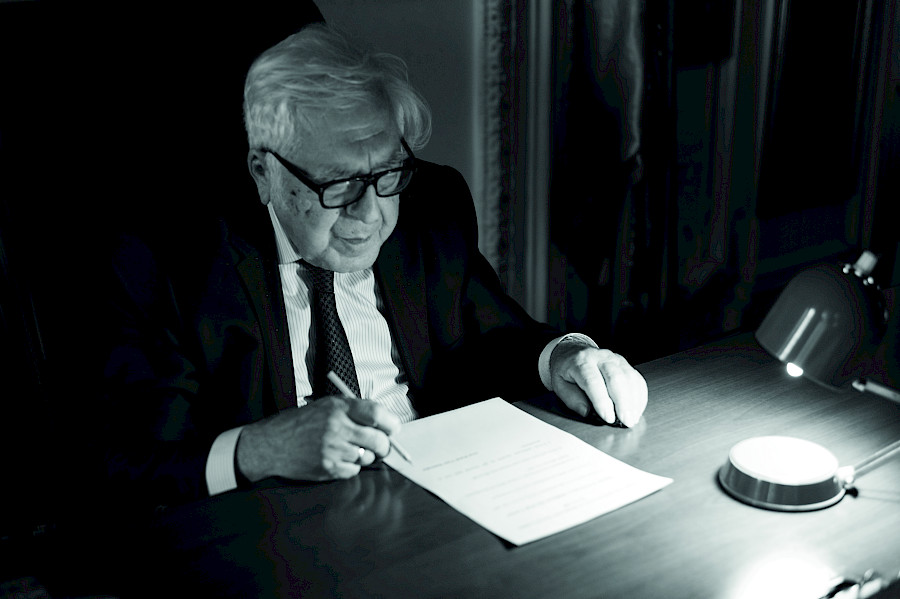
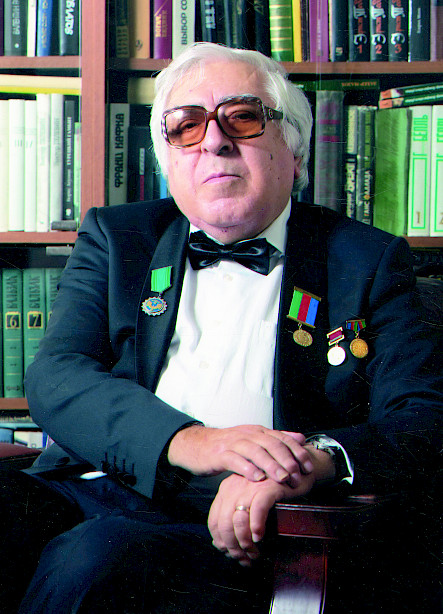
For more than half a century, Anar has remained one of the sharpest observers of human nature in Azerbaijani literature. His stories do not offer simple heroes or villains; instead, they explore people caught between freedom and conformity, love and loneliness, personal desires and social expectations. Perhaps that is why his works continue to resonate with readers across generations. Speaking with remarkable honesty and calm irony, the writer takes us back to the cultural atmosphere of the 1960s, reflecting on truth in literature, the loneliness of independent people, and why he believes society can never exist without books.
Let’s begin with your early years. What was your childhood like?
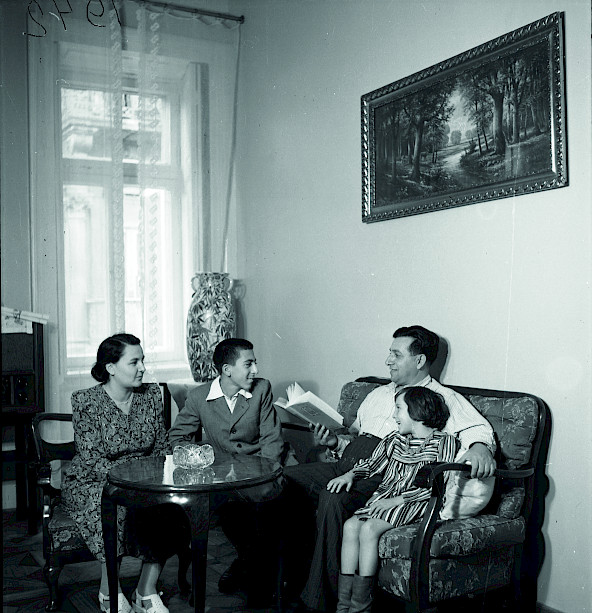
My childhood coincided with the war years. When the war began, I was only three years old. My father was serving at the front as a war correspondent. Of course, as a child, I couldn’t fully grasp what was happening, but over the years, I came to understand what our family had lived through – a time of hardship and fear. So, my childhood was inseparable from the fears of war. We had a large map at home where we followed the advance of the German troops and watched as those territories were liberated. My childhood, like that of many people of my generation, was shaped by the anxiety and uncertainty of the war years. In 1945, I began studying at the ten-year music school named after Bulbul. Then came university, followed by screenwriting courses in Moscow – and from there, life simply unfolded on its own.
How did you come to realise that you wanted to pursue writing seriously?
I started writing while I was still at school, but I was first published only in 1960, after my father read two of my stories and gave them his approval. One of them was “The Last Night of the Old Year”, which later became quite popular. The idea of writing as a profession came to me almost immediately after I finished school. At the time, my father was living in Moscow, and in his letters he strongly advised me not to apply to the Literature Institute. He would say, “Become an engineer, a geologist, a doctor! You’ll write anyway, but it’s important to have another profession too.” And to be honest, I still regret not listening to his advice at the time, because I think that if I had learned another profession outside literature, it would probably have enriched my writing as well. But the decision had already been made, and I enrolled in the Faculty of Philology.
You belong to the generation of Azerbaijani writers known as the “Sixtiers”. What was it like to write during the Soviet era at a time when censorship was everywhere?
Of course, it was a difficult time, but the Soviet era was not as monolithic as it is sometimes made out to be. The years in which I was writing coincided with the period of the “Thaw” – a time of relative easing of censorship – and we, the Sixtiers, came into literature during that period. After that, we simply couldn’t write any differently. It was during those years that extraordinary works were created not only in literature, but also in music, painting, and cinema. There was a remarkable creative breakthrough in music alone: Fikret Amirov, Gara Garayev, Tofig Guliyev, Arif Melikov, and later, Polad Bulbuloglu. In painting, Sattar Bahlulzade experienced a creative rebirth, while Tahir Salahov, Toghrul Narimanbekov, and Rasim Babayev were creating their most important works. In cinema, there were the films of Rustam and Magsud Ibragimbekov. It was the golden age of Azerbaijani art. No matter how much some may try to downplay that period, it remains one of the brightest chapters in the history of Azerbaijani culture. I am not saying that important works were not created later, but overall, the great flowering of the arts belongs to the 1960s and the 1970s that followed. In our time, there were no longer such rigid demands to write about the Party and similar themes. I always emphasise that this wasn’t our achievement – we were simply lucky with the time in which we lived. Had we been born a decade earlier, perhaps we too would have written about collective farms and the friendship of nations – or perhaps we wouldn’t have written anything at all. Personally, I think I wouldn’t have written anything, because I can’t tolerate falsehood. What I take pride in is that everything I wrote during the Soviet period is free of lies and falsehood. This applies not only to me, but also to all my friends who belonged to that generation. The Sixtiers didn’t create idealised heroes who resembled propaganda posters more than living people. I never understood the expression: “create a model for others to imitate”.
Why should anyone imitate someone else? A reader should reflect, not imitate.
You should at the very least have read William Shakespeare
“The Sixth Floor of a Five-Storey Building” – why do you think this work remains so popular to this day?
I sometimes joke that my other works are jealous of “The Sixth Floor of a Five-Storey Building”. In my opinion, they are no worse, simply less popular than “The Sixth Floor of a Five-Storey Building”. Perhaps the love story plays a role, though to me the work is not so much about love as it is about the fate of a person who remains free in a restrictive environment. And that is Tahmina’s tragedy. By nature, Tahmina is a free person, yet she lives in an unfree society that does not tolerate those who live by their own rules. In truth, this applies to our own time as well. A truly independent person often provokes irritation: why are they not like everyone else? Why are they different?
Have you ever imagined what you yourself would have done in your characters’ place? What would you have done if you were Zaur?
Every writer has to understand all of their characters, both good and bad – otherwise, the portrayal of life can never feel complete. No one is completely good or completely bad.
Did the film adaptation of the novel meet your expectations?
They are different mediums. That is why, when literary works are adapted for the screen, some people feel disappointed – everyone imagines the characters differently. Personally, I am very pleased with the film. I believe Rasim Ojagov was one of the finest directors not only in Azerbaijan but in the entire Soviet Union. At the same time, he was deeply influenced by the aesthetics of Italian neorealism. Especially while working on “Room in a Hotel”, I tried to draw him slightly towards mysticism, but he never really accepted that approach. He was a pure realist and a remarkable professional who made a wonderful film. We had no disagreements, only slightly different artistic visions of the film.
Without literature, society turns into an amorphous mass
If you were writing this work today, would you change anything in the plot?
No, I wouldn’t change anything, but I would continue to follow my characters’ lives. To me, my characters are real people, and I like to follow them through different periods of history. For example, to see what became of those I wrote about in the 1960s – who they had become by the 1980s, and how they lived in the 1990s. That is a very important aspect of my work. I hope people learn to understand each other and stop seeing everything as simply good or bad.
Let’s talk about “The Last Night of the Old Year”.
It was originally a short story, but, rather unexpectedly, filmmakers became interested in it. The story was adapted twice for Central Television in Moscow. It was also staged at the Youth Theatre, and Azerbaijani television later produced its own adaptation directed by Ramiz Hasanov. Something in the work must have resonated with people. Most likely, it was the timeless theme of parents and children. When I wrote the story, many critics were surprised that, at such a relatively young age, I had written about the fate of an elderly woman – and at the time I was entirely on her side. But with age, I have gradually come to understand her children as well, because everyone has their own life.
Isn’t that sad?
Yes, it is, but life itself is full of sadness. The tragedy of life is that desire shortens it. The moment you start longing for something, you begin living in the future, and that future is time slipping away from your life, bringing you closer to the end. But what can one do? That is simply the way life is.
What books should every person read in their lifetime?
I believe that, in order to consider yourself a cultured person, you should at the very least have read William Shakespeare, Miguel de Cervantes, Leo Tolstoy, Alexander Pushkin, Fyodor Dostoevsky, and Honoré de Balzac. And if we speak of Azerbaijani literature, then one must certainly read Mirza Fatali Akhundov, Mirza Alakbar Sabir, and the Book of Dede Korkut. There is an endless amount one can and should read. And of course, one cannot limit oneself to the classics alone; it is equally important to keep up with contemporary literature.
What is your view of contemporary literature?
I can’t say that I follow it particularly closely. But to be honest, in recent years I haven’t seen anything truly significant in Russian literature. I am not speaking about writers such as Leo Tolstoy or Anton Chekhov, but even writers much closer to our own time – people like Vasily Shukshin, Valentin Rasputin, or Yury Trifonov – have become increasingly rare.
The younger generation doesn’t read as much as people once did. What do you think about that?
Every technological invention moves humanity forward in one way while causing moral or emotional harm in another. Take the discovery of nuclear physics, and later the atomic bomb: it was a tremendous scientific breakthrough, but what did it ultimately lead to? The tragedies of the atomic bombings of Hiroshima and Nagasaki. The internet is also a great invention, but it has led to people becoming glued to their phones, unable to detach themselves from them. When I travel, I watch tourists carefully. They don’t really look around – they are too busy filming and photographing everything. They do not take in the views, the landscapes, or try to absorb the experience itself. For them, everything exists only through the lens of a phone or camera. The same thing is happening with knowledge. A four-volume novel like War and Peace can now be reduced to a brief summary, and people will still say, “I have read War and Peace.” But society cannot exist without literature. Without literature, society turns into an amorphous mass, incapable of truly feeling anything.
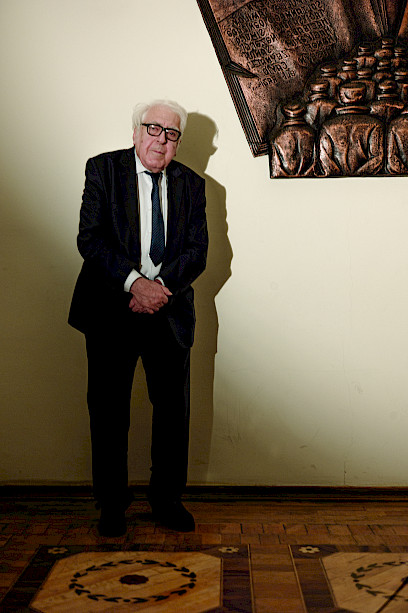
You are currently working on a book about your life, in which you write about your family. Could you tell us more about it?
It is a book I have been working on for almost thirty years, though that doesn’t mean I have been working on it continuously. Now, however, I am finally finishing it; I am already working on the last chapters. It traces the history of our family from the end of the nineteenth century to the present day. Our family lived through many events of great historical significance. My grandfather was the first Minister of Health of the Azerbaijan Democratic Republic (ADR) and the Governor General of Ganja city. When the Bolsheviks came to power, he was executed. My father was a minister and a writer, and at one point, our family was hanging by a thread, on the verge of repression. Then there was my own life, connected both to the years of the Nagorno-Karabakh conflict and to my time as a member of parliament. All of this is reflected in the book – history seen through the prism of a single family.
Who can really be called a happy person?
A person is truly happy only up to the age of five. After that, life begins. I don’t know whether there is such a thing as an absolutely happy person in this world… Perhaps there is not.
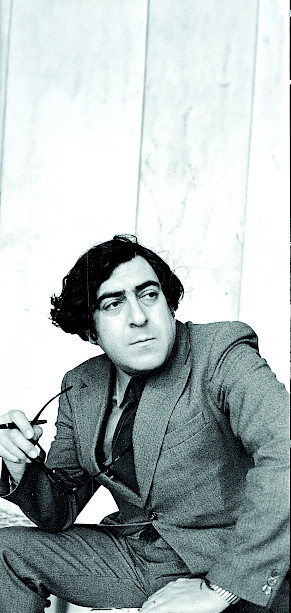
- During the Second World War, Anar’s father, Rasul Rza, served as a war correspondent.
- In his teenage years, Anar and the neighbourhood boys would sneak into late- night screenings at the Vatan cinema – one of the few places in the city showing American films on Sunday nights. It was probably there that his love for cinema began.
- Twelve films were made from Anar’s screenplays, three of them directed by Anar himself. One of his short stories was also adapted into the film Each Evening at Eleven at Mosfilm.
- Although Anar travelled widely throughout his life, he always remained deeply connected to Baku. While studying in Moscow, he missed the city so much that he would often go to the railway station just to meet the train arriving from Baku, hoping to see a familiar face.