
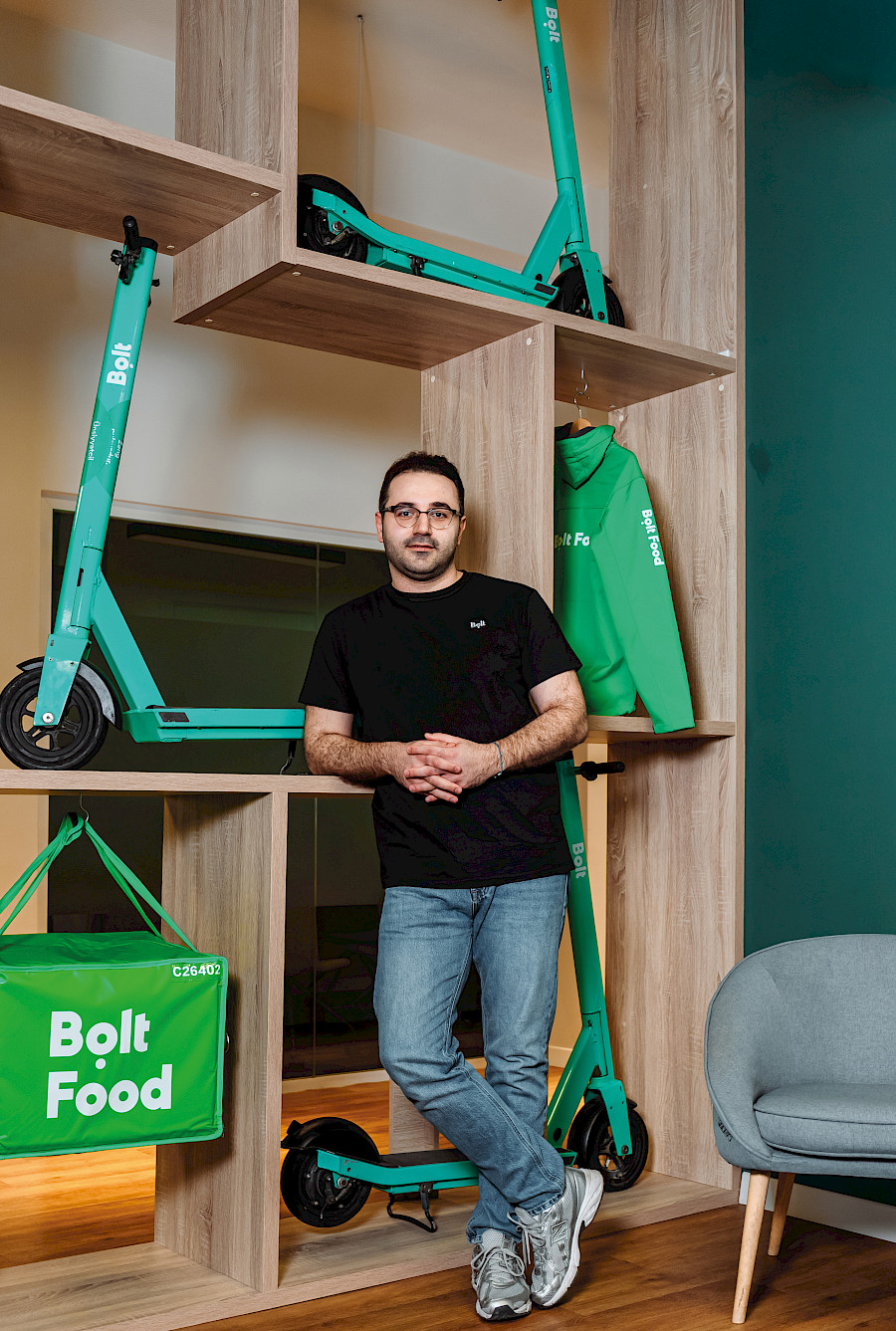
From how we move through the city to how we order dinner or manage company expenses – digital platforms are quietly reshaping everyday life in the country. Bolt Azerbaijan, operating across ride-hailing, food delivery, and corporate mobility, sits at the centre of this transformation. In the following conversations, the General Managers of Bolt Food, Bolt Ride – Hailing, and Bolt for Business reflect on how technology is adapting to a market that still values human connection, how habits are evolving, and what the future of seamless, integrated services might look like.
You are new to this role and bring substantial experience from the FMCG and technology sectors. How would you describe your experience at Bolt so far, and what opportunities are you discovering?
Joining Bolt after Procter & Gamble and Samsung Electronics has been a clear shift in pace and impact. Decisions and market feedback happen almost in real time, making the role highly dynamic and accountable.
There’s also strong continuity with my past experience – structured thinking, consumer focus, and execution still matter, but here they need to be simplified and applied much faster.
Having worked across seven markets in Turkiye, the Caucasus, and Central Asia has shaped my approach. It reinforced the importance of local nuances, adaptability, and leading diverse teams, which is critical in a business like Bolt.
What excites me most is the level of ownership and the immediate impact you can drive. The key opportunities I see are improving marketplace efficiency, becoming sharper in understanding local market dynamics, and building a highly aligned, fast-moving team.
Security and transparency are the key expectations of users today. How does Bolt address them from a technological perspective?
Trust is not a feature — it is the foundation everything else is built on. At Bolt, we have designed our platform so that transparency is built into every step of the journey, not added as an afterthought.
Before a passenger even gets into a car, the app shows them the driver's name, photo, vehicle make, and licence plate number. Verifying those details takes seconds, and it matters enormously. Every driver on our platform goes through a vetting process, and those who do not maintain our safety and service standards simply do not stay on the platform.
Beyond that, we offer tools that put control in the passenger's hands. The Pickup Code feature means a trip can only begin once the passenger shares a unique confirmation code with the driver — eliminating any ambiguity about whether you are in the right car. The Trip Sharing function allows users to send their live route to a trusted contact, so someone always knows where you are. And our in-app Safety button gives instant access to support if anything feels wrong during a journey.
We also maintain a continuous feedback loop — both passengers and drivers can report any suspicious or inappropriate behaviour directly through the app. This collective responsibility is what keeps the platform honest. Safety is not something Bolt delivers to users; it is something we build together with them.
What technologies form the foundation of effective trip management in a city with traffic as busy as Baku's?
Baku is a city of real contrasts — wide boulevards that can come to a standstill in minutes, a rapidly growing population, and urban geography that makes predictability a real challenge. Managing mobility in this environment requires intelligent technology, not just a large fleet.
At the core of what we do is real-time data. Our algorithms continuously analyse traffic conditions, demand patterns across different districts, and driver availability to match the right driver to the right passenger as efficiently as possible. Route optimisation adjusts dynamically — so a driver is not simply following a fixed path but responding to what is happening on the ground right now.
Today in Azerbaijan, we collaborate with tens of thousands of active partners, while more than one million customers use the service every month. That scale is actually an advantage — the more journeys that happen on the platform, the smarter our systems become at predicting where demand will spike.
We also invest heavily in the driver-side experience, because a well-informed, well-supported driver is a more efficient one. The tools we give drivers — navigation, in-app communication, earnings tracking — are all designed to reduce friction so they can focus on the road.
How has Bolt Ride – Hailing changed the everyday reality of drivers?
This is something I feel strongly about, because the impact on drivers is often underreported in conversations about mobility technology.
Before platforms like Bolt, a driver's income was largely unpredictable — dependent on location, luck, and informal networks. Today, a driver on our platform has access to real-time demand information, can choose when and where they work, and sees exactly what they earn per trip with full transparency. That shift from uncertainty to visibility is genuinely life-changing for many people.
But beyond income, there is the question of dignity and professional identity. Tens of thousands of drivers in Azerbaijan are not just people transporting passengers from point A to point B — they are running their own micro-businesses with the support of a platform that provides tools, data, and a community. We invest in regular training and communication around road safety and professional conduct, which also means drivers feel they are part of something structured and reputable, not just picking up fares.
With millions active passengers using the platform every quarter, drivers benefit from steady, consistent demand that would have been impossible to access independently. The platform essentially gives every driver access to a city-wide customer base. That is a structural change in how people can build a livelihood, and I think it is one of the most meaningful things we do.