Opening a new chapter in the history of Azerbaijani sport, Joshgun Aliyev proudly represented his country on the international stage by winning a silver medal at the 2025 Tokyo Summer Deaflympics. His determination, resilience, and fighting spirit at the most prestigious competition for athletes with hearing impairments have made him a source of inspiration for thousands of young people.
In recognition of these achievements, President of the Republic of Azerbaijan Ilham Aliyev signed a decree awarding a group of sports figures for their contribution to the development of sport in the country. Among those honoured was Deaflympic athlete Joshgun Aliyev. Despite his young age, he has achieved significant milestones in the history of Azerbaijan’s Deaflympic movement and was awarded the “Tərəqqi” Medal. This award represents a high-level state recognition of his professionalism, perseverance, and valuable contribution to national sport, particularly to the Deaflympic movement.
Joshgun Aliyev’s award is also a clear demonstration of the attention and support given to Deaflympic sport in Azerbaijan and opens new horizons for young people with hearing impairments. In this interview, Joshgun Aliyev speaks about his journey to success, how he overcame challenges, and his future ambitions.
Joshgun, you made history for Azerbaijan at the Deaflympics. What does this achievement mean to you?
I feel extremely happy. Naturally, the high-level recognition of the medal I won by the country’s leadership, being awarded the “Tərəqqi” Medal, and meeting with Mr President represent the highest value of this historic achievement for me. It is not only a great appreciation of my efforts, but also a powerful source of motivation for my future journey.
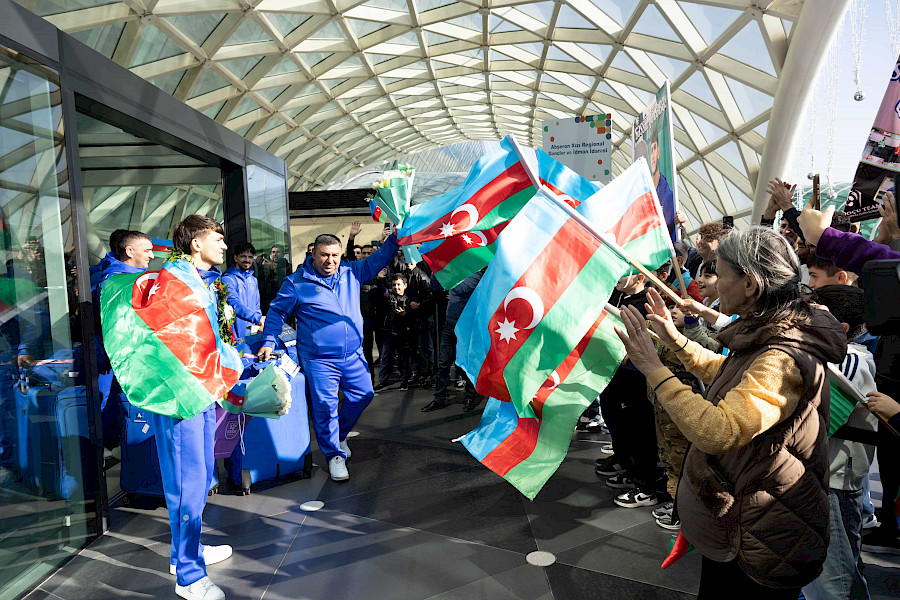
One of the most unforgettable moments after this success was the welcome at the airport. I met my father, and I will never forget the look of pride in his eyes. I expected my family and representatives of the Deaflympic Committee to be there, but seeing such a large group — including young children and representatives of various institutions — made me especially proud. It was truly an unforgettable moment.
Who did you contact first after winning the silver medal, and what did you feel?
I called my father first and showed him the medal. I was extremely emotional and couldn’t hold back my tears. My parents were overjoyed and always tell me how proud they are of me. Their support means everything to me.
How has this historic result changed your life?
I can already feel the changes. When I meet my teammates, I sense a different attitude. When I step onto the tatami, my opponents realise they are facing a Deaflympics medallist. This brings both responsibility and additional inner strength.
How did you start practising judo, and why did it become important to you?
I started judo at the age of five on my father’s advice. At first, it was very difficult and even painful, but over time I fell in love with the sport. My greatest strength during competitions is my self-belief. When I step onto the tatami, I am mentally prepared.
Who was the toughest opponent for you at the Deaflympics?
My first opponent was a very strong athlete from Korea. I believed that if I defeated him, the rest would be easier — and that’s exactly what happened. The match against the Croatian athlete went relatively smoothly. My third opponent was physically stronger, but I won thanks to technique. In the final, I faced a Brazilian athlete. I was very close to victory, but a single mistake decided the outcome.
What did you feel during the medal ceremony?
Since childhood, I had watched the Olympic and Paralympic Games, trying to imagine what medal-winning athletes feel. At that moment, I realised I was experiencing those same emotions myself. It’s hard to put into words. Seeing our flag raised fills you with a special sense of pride.
What competitions are you preparing for next?
After winning the silver medal, my motivation grew even stronger. Even while in Japan, I was eager to return to Baku and start training again. I am currently preparing for the European and World Championships.
What is your biggest career goal?
When I first started in sport, I watched athletes without physical limitations competing internationally and wondered how they reached that level. Over time, I realised that this path is open to me as well. I have set clear goals and believe that there are no obstacles to becoming a European and world champion.
How did you manage to combine sport and education?
I always attended school and went to training sessions after classes. My teachers supported me and encouraged me not to give up sport. Even when I fell behind academically, I tried not to fall behind in sport.
Were there moments of exhaustion or difficulty along the way?
Of course. Balancing school and sport was sometimes challenging. There were moments when people around me didn’t understand me. But I never gave up on my goal. On the contrary, I encouraged my friends to take up sport. Today, seeing many of them actively involved in sport makes me especially proud.
Did your hearing impairment ever feel like an obstacle?
At times, I thought competing would be too difficult for me, and those thoughts discouraged me. But the support of my teachers and coaches gave me strength. I often trained with athletes without impairments and learned from them. At the Deaflympics, I realised that we were all in the same situation, and there was no reason why I couldn’t win.
What would you like to say to young people with hearing impairments?
After the Deaflympics, when I met people with hearing impairments, I showed them my medal. Many asked what kind of medal it was. I explained that there is a Deaflympic Committee and that athletes with hearing impairments compete internationally. I told them: if I could do it, you can too. The most important thing is to believe in yourself and not hesitate. One day, you too will proudly raise our flag.
Was there a turning point in your life?
When I was 15–16 years old, I often competed against athletes without disabilities and lost frequently. Those defeats became a turning point for me. I realised I needed to work harder, and over time I saw the results of that effort.
Was there an athlete whose fighting style inspired you?
I always followed the performances of our national judo team with great interest. In particular, Hidayat Heydarov’s fighting style became a serious role model for me. I tried to replicate his techniques in training, especially throws adapted to height differences. His style gave me strong motivation to move forward with confidence.